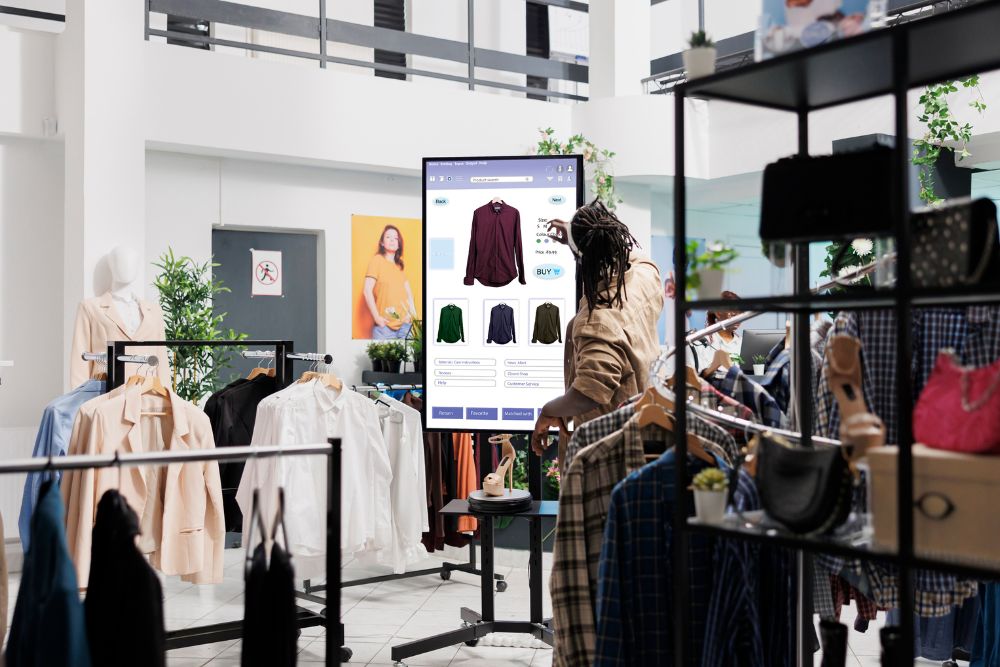
Have you ever stopped to think that your customer no longer sees a boundary between online and offline? For them, the shopping experience is one, continuous, and fluid. It is precisely in this scenario that the concept of phygital in practice ceases to be a futuristic trend and becomes an immediate necessity for retail. Combining the best of the physical world (touch, experimentation, human service) with the advantages of the digital world (convenience, personalization, agility) is the way to create a memorable and, above all, more profitable journey.
Therefore, in this article, we will delve deep into tangible strategies for you to apply the phygital model to your business. In other words, we will show you how to transform your operation, whether primarily physical or digital, into a machine of integrated experiences that captivates and builds loyalty.
WHAT IS PHYGITAL AND WHY CAN'T YOUR STORE IGNORE IT?
First and foremost, it's essential to understand the concept. The term Phygital is a fusion of the English words physical and digital . However, it goes far beyond simply having a physical store and an e-commerce platform. The true essence of phygital lies in the intelligent and strategic integration of these two worlds , so that one complements the other invisibly to the consumer.
So why is this so crucial now? The answer lies in the behavior of the modern consumer. They research online before visiting the store, use their smartphone inside the point of sale to compare prices or seek more information, and, moreover, expect the same speed of service in physical stores as they did in the digital world.
According to experts at Wake , an e-Plus partner, phygital retail focuses on providing experiences that transcend the point of purchase. It's not about competition between physical and online retail, but rather a powerful collaboration. Ignoring this reality creates friction in your customer's journey, which can lead to lost sales and loyalty. In short, phygital is not an option, but the natural evolution of retail.
PHYGITAL IN PRACTICE: 5 STRATEGIES TO START TODAY
Now that the concept is clear, let's get down to business: how to apply phygital in practice ? Below, we list five effective and accessible strategies that can be the starting point for transforming your store.
1- Click and remove (Click and collect): The essential bridge
This is perhaps the best-known and one of the most efficient phygital strategies . It allows customers to buy online, from the comfort of their home, and pick up the product at a physical store.
- Why does it work? First, it combines the convenience of online shopping with the instant gratification of in-store pickup, eliminating the anxiety of waiting and the cost of shipping.
- Value added: When searching for the product, the customer contacts your physical store, which opens up an excellent opportunity for upselling and cross-selling by a well-trained team.
- In practice: Create a well-marked and responsive pickup area. Also, use the "product ready for pickup" notification to send an exclusive discount coupon for in-store use at the time of pickup.
2- Smart QR Codes: The shelf becomes infinite
The QR code is a simple yet extremely powerful tool for connecting the physical and digital worlds within your store. It acts as an instant portal to a universe of information.
How to apply?
Place QR Codes next to products on the shelf. Scanning them can direct customers to:
- A product page in your e-commerce, with more photos, videos and detailed descriptions.
- Ratings and reviews from other buyers, increasing social proof.
- Usage tutorials or suggestions for complementary products.
- Add the item to a “wishlist” online to buy later.
The great benefit
This tactic creates the concept of an " infinite shelf ." Even if a product is out of stock in the physical store, the customer can scan the QR code, buy it online, and choose to have it delivered to their home or pick it up at another branch.
3- Virtual fitting rooms and interactive mirrors
Augmented Reality (AR) technology is becoming increasingly accessible and can revolutionize the point-of-sale experience, especially in fashion, accessories, and cosmetics stores.
- How does it work? Smart mirrors can allow customers to "try on" different items of clothing without having to change. Similarly, a kiosk or the store's own app can use the phone's camera to virtually apply makeup or try on glasses.
- Impact on the journey: this strategy reduces queues in fitting rooms, makes the experience more fun and interactive and, consequently, increases customer engagement with the brand. Furthermore, the data collected can generate valuable insights into audience preferences.
4- Real-time customization with beacons e geofencing
Here, integration reaches a new level of sophistication. Location-based technologies enable hyper-personalized communication with the customer who is in the store.
- In practice: beacons are small devices that, via Bluetooth, communicate with the customer's smartphone (which has the store's app installed). When passing through a certain section, for example, they can receive a notification push with an exclusive offer for products in that aisle.
- The power of relevance: this approach transforms mass communication into a individual dialogue. Instead of a generic offer, you deliver the right benefit, in the right place, at the right time, dramatically increasing your chances of conversion.
5- Invisible payments
The checkout line is undoubtedly one of the biggest points of friction in physical retail. Scan & Go technology completely eliminates this step, mirroring the fluidity of an e-commerce checkout.
- How to implement? Using the store's app, customers scan the barcodes of the products they wish to purchase, add them to a virtual shopping cart, and pay directly from their cell phone using their registered credit card.
- The final experience: Upon completing the purchase, customers receive a confirmation QR Code, which they can present to an employee upon exiting the store. Simple, fast, and hassle-free. This demonstrates that your brand values customers' time, which is a huge competitive advantage.
HOW TO IMPLEMENT A SUCCESSFUL PHYGITAL STRATEGY?
Implementing phygital in practice requires more than just technology: it demands a change in mindset and careful planning.
- Map your customer journey: First, deeply understand how your customer interacts with your brand across all touchpoints. Where are the frictions? Where are the integration opportunities? Use data from your CRM, Google Analytics, and satisfaction surveys.
- Invest in the right technology: technology is the tool, not the end. Choose more robust platforms, such as Wake ou VTEX, that is, they must be integrated and scalable. The solution must unify inventory, customer data, and sales channels in a single place.
- Train your team to a phygital mindset: Your physical store team is on the front line of this transformation. They need to understand and embrace new technologies, acting as consultants who help customers navigate the physical and digital worlds, whether finding a product online or completing a purchase via an app.
THE REAL BENEFITS OF PHYSICAL-DIGITAL INTEGRATION
Adopting a well-structured phygital approach generates concrete results that go far beyond a "modern brand" image. The benefits include:
- Increased sales: by reducing friction and creating new purchasing opportunities (such as upselling in Click and Collect), the natural result is an increase in revenue.
- Improved Customer Experience (CX): A customer who experiences a seamless, personalized, and convenient journey becomes a fan of the brand. This translates into higher satisfaction and repeat purchase rates.
- Richer data collection: Integration allows you to collect customer behavior data both online and offline, generating a 360-degree profile. This enables, for example, much more assertive marketing campaigns.
- Inventory optimization: With a unified view of inventory, you can use your physical store inventory to fulfill online orders (ship from store), optimizing logistics and avoiding losses.
- Brand strengthening: Companies that master phygital are seen as innovative and customer-centric, which builds a solid and lasting reputation in the market.
CONCLUSION: THE FUTURE OF RETAIL IS NOW
In short, phygital is no longer a distant concept in practice . It's the reality of smart, customer-centric retail, prepared for the future. The integration between the physical and digital worlds has ceased to be a differentiator and has become an essential strategic pillar for the survival and growth of any business.
Start small, choosing one or two strategies that make the most sense for your audience and your operation, such as Click and Collect or the use of QR codes . Measure the results, learn from the process, and gradually move on to more complex integrations. The most important thing is to take the first step in building a truly unified shopping experience.
Did you enjoy this content and want to continue learning more about the best strategies for your business? Explore other articles on our blog and discover the top e-commerce and digital marketing trends for this year!