
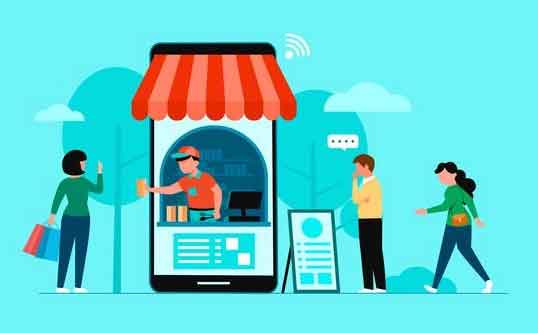
Unified commerce is the name given to the commerce approach that integrates different online and physical sales channels as if they were a single channel. In effect, it enables a seamless shopping experience, which provides more convenience to consumers and generates more sales.
For example, in a unified commerce model, a consumer can start a purchase in a physical store and complete it online, and vice versa. Furthermore, this type of commerce unifies your company's inventory, making it possible to create an endless shelf and avoid stockouts.
Unified Commerce also enables experiences such as:
- pick up in store: the customer buys in any channel and picks up in one of its physical stores;
- Click & Collet: the customer reserves a product in a physical store and analyzes the item before buying;
- ship from store: its physical stores become distribution centers allowing the customer to buy in one store and pick up in another according to demand and occasion;
- ship to store: one of your physical stores sends the product to another store to satisfy a local customer;
- return in store: allows the customer to exchange a product purchased in the virtual store in a physical store.
Additionally, this business approach allows you to track consumer behavior across all online and physical touchpoints. In this way, you can create a robust database with information that will help you gain insights to improve your business on a large scale.
HOW TO BUILD A UNIFIED TRADE?
To set up a unified commerce business, you should use a unified commerce platform . VTEX and Linx , for example, are two good platforms of this type. They have features such as an OMS system for inventory integration and order management; and integrated checkouts that allow consumers to start a purchase experience on one channel and finish on another.
These platforms also feature shareable shopping carts , which can be sent to the consumer's email so they can complete the purchase later. Furthermore, they integrate with multiple payment, logistics, customer service, feedback, and security applications, among others. They also integrate with ERP, CRM, WMS, and other software.
Platforms like this unify their online channels such as virtual stores, multi stores, marketplaces and hotsites, etc., with their physical channels such as street stores, guide shops, pop up stores, etc., making it all seem like a single channel to consumer eyes.
As soon as you can, click on “ Adyen ” and discover a unified commerce payment solution.