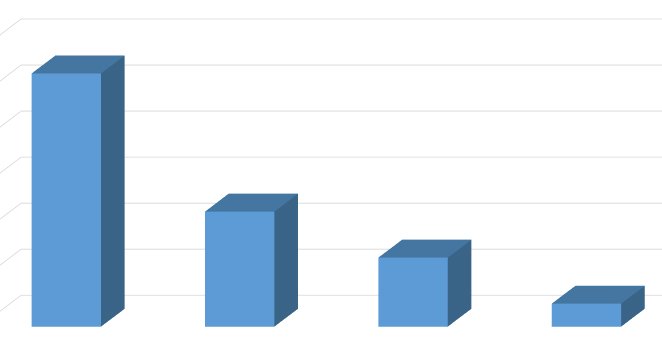
Would you know what a long tail is? It is an English term that means “long tail” and that in SEO and Inbound Marketing for e-commerce names a keyword selection strategy for content creation purposes. But in other areas, that is to say, he names other types of strategies.
First of all, just to provide context, the term "long tail" began to gain popularity around 2004. That year, writer Chris Anderson mentioned the term in a Wired magazine article when discussing market niches.
Anderson based the idea of the “long tail” on the “Pareto Curve”, a graph developed by economist Vilfredo Pareto (1848-1923). According to such a curve, 80% of the consequences of phenomena come from 20% of the causes. Translating this idea in a simplistic way to the e-commerce context, in any list with 100 products, there will be 20 that will be most liked by the public, so that the 80 least liked will form a long tail on the graph. Find out more then!
WHAT IS LONG TAIL AND HOW DOES IT APPLY TO E-COMMERCE?
As stated, according to the Pareto Curve that anchors the long tail, 80% of the consequences come from 20% of the causes. Thus, we can say that in a list with 100 items we will have 20 most accessed, which we will call “head” or head tail and 80 less accessed, which we will call “long tail”, long tail or simply “niches”. Keep this information.
For now, think about the recent past, before the development of the internet. At that time, physical stores only displayed the best-selling products on their shelves, as there was no space to display all of them. That is, they only exposed the head tail items, the top 20%, which generated more sales; and they avoided the niches, which had less outlet.
With the advent of the internet, however, the problem of shelf space disappeared. In e-commerce, the showcase is infinite, that is, there is no problem of space. Therefore, you can display your complete product mix, that is, the top 20% of the head tail and the 80% of the long tail.
But that's not all. In e-commerce, in addition to showcasing all your products, you can create an Inbound Marketing and SEO strategy with content based on head and long-tail keywords. Learn more about this below.
INBOUND MARKETING FOR E-COMMERCE: LONG TAIL AND SHORT TAIL
Inbound Marketing is a Marketing concept that is based on content publishing. In this way, it aims to make consumers looking for solutions on Google find your content, your brand and your products.
Consumers, in turn, use keywords to search for content on the web. For example, a consumer might Google the keyword “printed shirt” and find a product page from your online store.
Note that in order to be found, you need to produce content based on the keywords searched mainly on Google. Knowing this, you will be able to create a list of keywords that consumers are looking for on the web and that refer to your e-commerce, and create content on your blog and online store for each of them.
For example, use a tool like Keyword Planner to generate a list of 100 keywords searched on the web that relate to your business. If you create a graph, you will discover that 20% of these words will be the most searched, that is, the head tail keywords; and the remaining 80% will be less searched and therefore will be the long tail or niche keywords.
Finally, produce content for each keyword. Post this content to your e-commerce blog and it will be found on the web. You can also name your store's product pages, each with a keyword to achieve the same effect. Thus, you will cover both the head tail and the long tail in your store, attract more consumers and certainly make more sales.
As soon as you can, click on “ How many SEO keywords to use in an e-commerce blog ” and read a complementary post!