In e-commerce, behavioral modeling is what we call the process of monitoring, analyzing and interpreting data about the behavior of consumer groups in order to understand, predict and anticipate their preferences, actions and purchasing decisions.
In practice, this process allows you to understand and, therefore, create more appropriate experiences for groups of consumers with common interests and behaviors. In this article, we will show you what you gain and how to achieve this in your e-commerce. Follow along!

Follow @agenciaeplus on Facebook!
WHAT DO YOU GAIN FROM DOING BEHAVIORAL MODELING?
By implementing behavioral modeling in your e-commerce, you can benefit in several ways. For example, by understanding consumer behavior, you can predict how they might act in the future. This, in turn, allows you to:
- Anticipate customized solutions;
- Segment consumer groups with common behaviors and interests;
- Personalize shopping experiences to the exact measure for each consumer group;
- Optimize Marketing campaigns to reach each audience with the appropriate message;
- Identify bottlenecks and friction in sales flows and communication with consumers and correct them;
These and other advantages can certainly increase consumer satisfaction with their shopping experiences on your e-commerce site, but that’s not all. In fact, more satisfied customers are more loyal, buy more, and speak positively about your brand to friends and family. In other words, behavioral modeling can be the key to opening a new cycle of improvements in your e-commerce site. Read the next topic and learn how to implement it!
HOW TO DO BEHAVIORAL MODELING?
Behavioral modeling primarily requires tools for data collection, monitoring, and analysis. Therefore, especially in e-commerce, it is important to use software such as:
1 - CDP:
A Customer Data Platform (CDP) makes it possible to unify data and create a 360º profile of consumers. Furthermore, it allows for advanced segmentation and predictive analytics. With this type of platform, you can obtain data to activate marketing campaigns and personalize your sales channels.
2 – DXP:
Although it is not a specific tool for behavioral modeling, the Digital Experience Platform (DXP) allows you to perform tests, collect data and analyze trends. In this way, it also makes it possible to personalize experiences and even orchestrate marketing campaigns.
3 – CRM:
An acronym for Customer Relationship Management, a CRM platform enables the collection, organization, and analysis of business data. It also allows you to segment contact lists and create predictive models of consumer and customer behavior.
4 – CMS:
Although behavioral modeling is not its primary function, a Customer Management System (CMS) platform allows you to create fields for collection, storage, and querying. In addition, it allows you to translate data into engaging experiences for online consumers.
Deco.cx , for example, is a hybrid CMS/DXP software that can be used in this context. Similarly , the CRM and Inbound Marketing and Marketing Automation platform RD Station , which brings together tools such as Lead Scoring and Lead Tracking for behavioral analysis, can also be used.
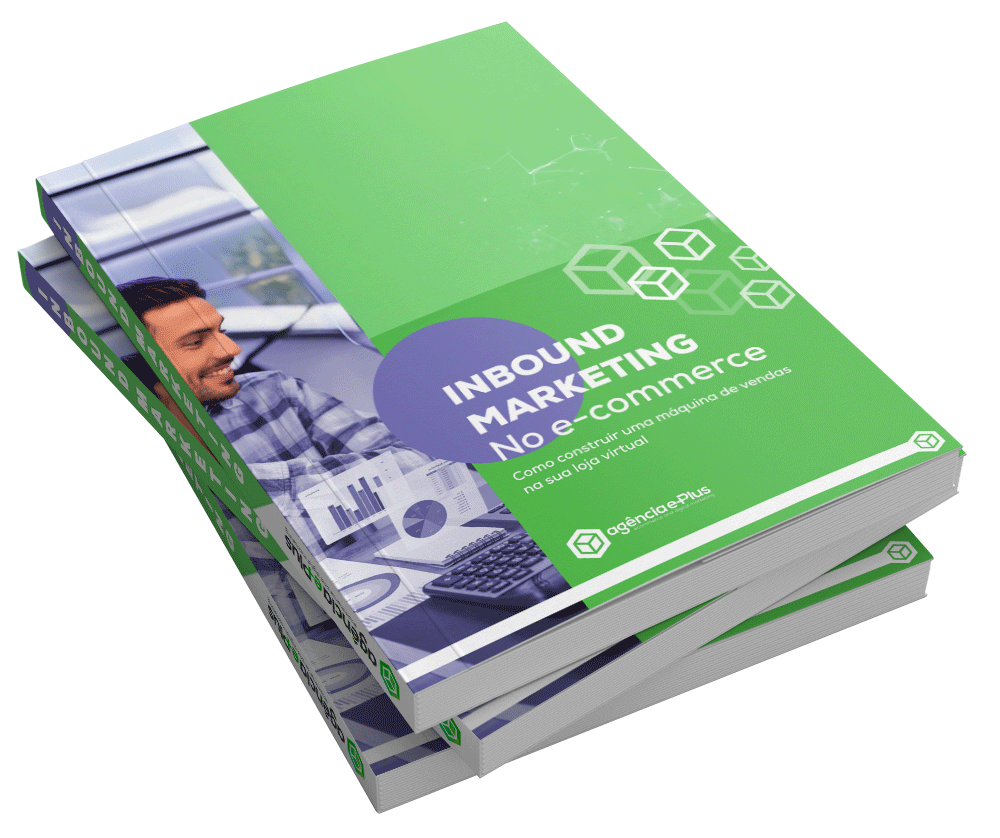
Inbound Marketing in E-commerce
Click the button below to download the free e-book "Inbound Marketing for E-commerce" produced by Agência e-Plus!
Another type of platform that can be used in behavioral modeling is Analytics. These are platforms such as Google Analytics and Adobe Analytics. With them, you can collect, store, organize, visualize and analyze data and predict consumer behavior.
Either way, behavioral modeling can really help you turn your e-commerce business around. After all, if you can know what consumers are going to do next, then it becomes much easier to create experiences that can drive more purchasing decisions on your e-commerce site.