Inbound Marketing is an English word that means “Inbound Marketing” or “Attraction Marketing”, also called Content Marketing. It brings together strategies, techniques and tools that aim to make visitors to a website or virtual store, for example, willingly convert into customers (who buy once) and later into customers (who buy more often).
Inbound Marketing in E-commerce
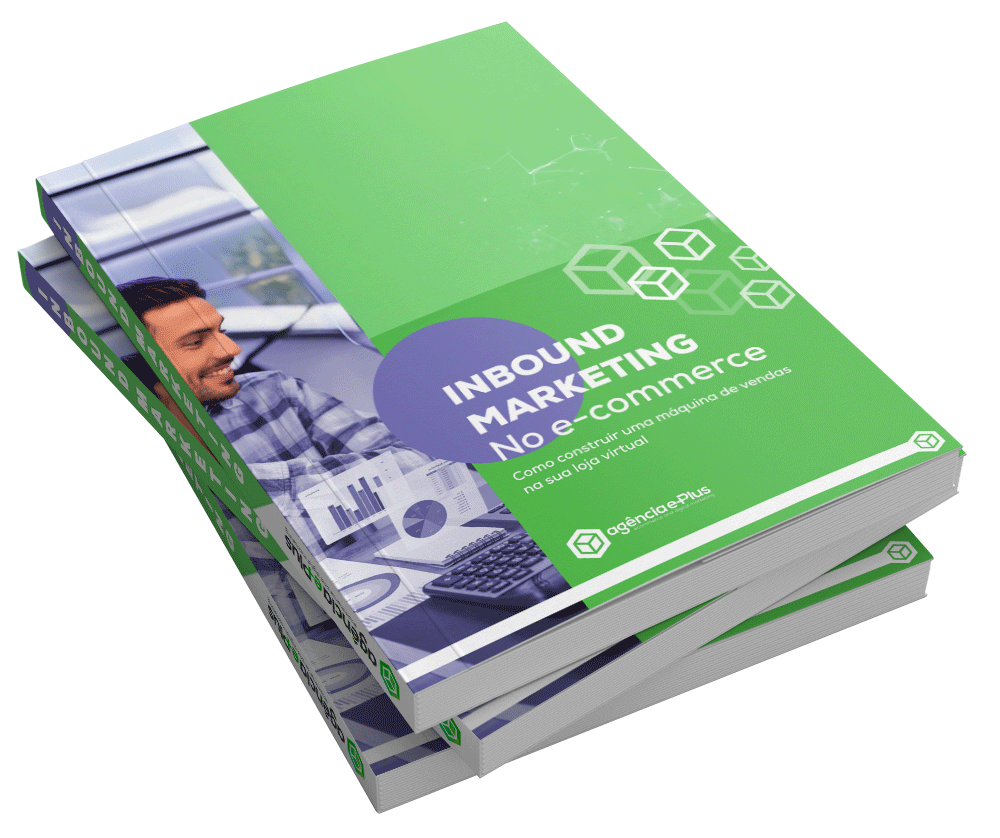
Click the button below to download the free e-book "Inbound Marketing for E-commerce" produced by Agência e-Plus!
This type of marketing is based on the creation and publication of free educational content aimed at a specific buyer persona . People read this content in text or watch it in videos and only buy relevant products when they feel ready to do so.
- As soon as you can, read also: “E-commerce Marketing: what is the difference between Buyer Persona and Customer Profile?"
It is different from Outbound Marketing or “Outbound Marketing”, which aims to force the purchase of products through a more aggressive sales pitch.
GRADUAL TRANSFORMATION
Throughout the Inbound Marketing process (as we will see later), unknown Internet users gradually become:
- Visitors
- Leads
- Suspects
- Prospects
- Clients
- Customers/promoters
With each step on the scale indicated in the previous topics, confidence and the probability that one or more purchases will take place are increased.
Well, enough talking! Check out the 4 pillars of Inbound Marketing and their features below:
1 - Attraction
In Inbound Marketing, the Attraction pillar aims to convert unknown internet users into active visitors to a blog, e-commerce site, e-commerce video channel, or online store, for example.
In the context of the Buyer’s Journey, this is where visitors are in the Awareness phase. In other words, this is when they are learning about your business and your products and services. This is when they are checking whether these products will meet their desires or solve their problems.
Just to remind you, the Purchase Journey consists of the following phases:
- Awareness
- weighting
- Decision
- Affiliation
- Loyalty
Access the article " The Relationship Between the Consumer's Buying Journey and Your Online Store " to learn more about this.
As an e-commerce manager , your goal within the Attraction pillar of Inbound Marketing is to create free blog posts and videos that answer questions from your Buyer Persona audience. This content will attract visitors through organic searches on Google, Bing, Yahoo, or other search engines, increase trust between you and them, and lay the groundwork for the next phase.
2 - Conversion
The “Conversion” pillar focuses on transforming active visitors into “leads” (Email Marketing subscribers, fan page followers, etc.), which is done by distributing buttons and forms on blogs, channels, social networks, etc., which, when activated, generate content subscriptions.
This is a transition from the Awareness phase to the Weighting phase in the Buying Journey, where the degree of trust between seller and buyer increases.
Subsequently, leads begin to receive and read your email messages and posts published on social media, among other places; that is, all your content aimed at what is called Lead Nurturing.
When they become viewers and readers of the content they subscribed to, leads are called “suspects”, that is, suspected of being buyers.
3 - Closing
The “Closing” pillar aims to transform suspects into “prospects” and, subsequently, into “clients”.
Prospects are none other than the formerly suspects who have gone through the Awareness and Weighting stage of the Buying Journey and who are now advancing to the Decision stage, ie making a purchase.
At this point, prospects feel ready to buy and, therefore, of their own accord, begin to seek greater contact with your e-commerce website, whether through chat, phone, email, or directly on the product page.
As soon as they make their first purchase, prospects are called “customers” and enter the Affiliation stage of the Purchase Journey.
4 - Enchantment
The “Enchantment” pillar of Inbound Marketing aims to convert customers into “customers” and “promoters” of your e-commerce business.
This will depend on how good the User Experience (UX) and Customer Experience (CX) offered in your e-commerce business as a whole are.
CX refers to experiences, experiences and impressions; while UX refers to usability, interactivity, ease that a consumer has (or not) when in contact with your e-commerce.
Either way, if good enough, UX and CX will move customers from the Membership stage to the Loyalty stage of the Buyer’s Journey.
Once loyal, customers will not only come back to buy more often, but they will also become natural promoters of your online store. They will indicate you on social networks, in email messages and will do a positive word-of-mouth marketing of your e-commerce.
ANALYSIS AND OPTIMIZATION IN INBOUND MARKETING
In parallel with the application of the 4 pillars of Inbound Marketing to your e-commerce, the analysis and optimization of the entire process takes place.
Tools such as Google Analytics and statistical resources from CRM software, email marketing , social media insights, etc., are used.
These numbers are interpreted and transformed into actions aimed at continuous improvement.
- As soon as you can, read also: “Flywheel: how to use this toolment in your e-commerce?"
The lead scoring
In the Inbound Marketing process, tools such as lead scoring are also used , in which consumers are assigned scores throughout the Buyer's Journey. This allows you to know which ones are closest to the purchase decision phase and speed up closing deals with them.
Is it worth investing in Inbound Marketing?
Inbound marketing doesn't generate immediate results like sponsored links for e-commerce . It requires time, which can range from six months to two years, to yield its first consistent results.
In this strategy, it is the content of posts and videos that will attract visitors, who will find your blogs and channels in the organic searches of search engines such as Google.
Therefore, once the production of content for Inbound Marketing purposes is started, the ideal is never to interrupt it, since search engines give preference to active content providers.
As you can see, it takes a lot of patience to work with Inbound Marketing, however, its fruits are great and excellent for the success of an e-commerce business like yours.