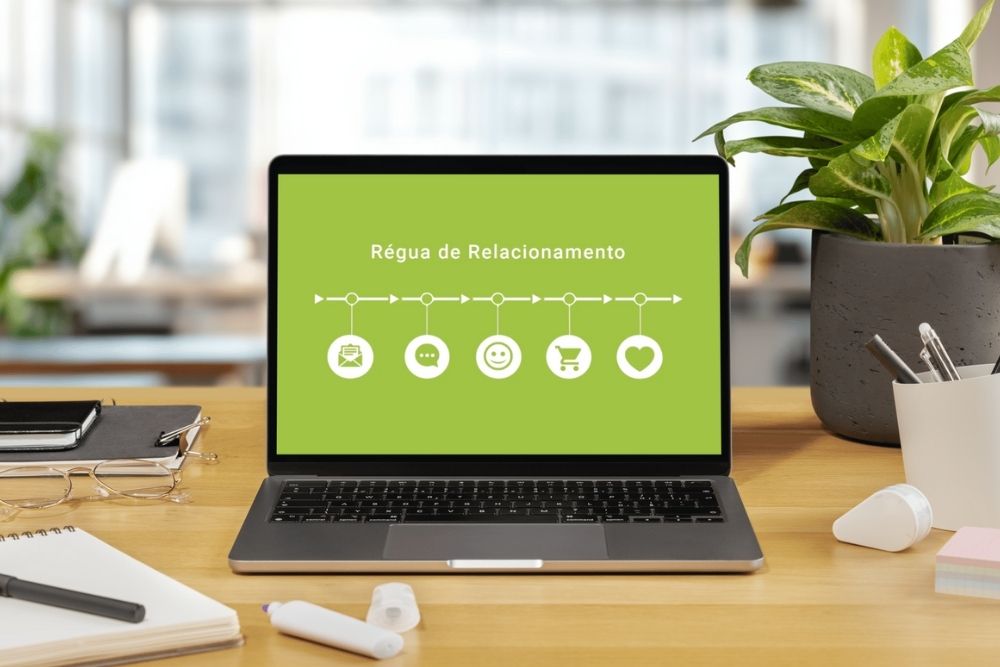
Creating a relationship management framework in e-commerce is one of the most effective strategies for increasing repeat purchases and building customer loyalty . With it, you can send the right message to the right person at the ideal time, as well as nurture the customer journey in an automated and personalized way. Therefore, in this article, you will understand what this framework is, how to apply it, and also discover the main triggers to stimulate new purchases.
WHAT IS A RELATIONSHIP RULER AND WHY IS IT ESSENTIAL IN E-COMMERCE?
A relationship management framework is an automated communication flow that accompanies the customer from their first contact with the store to after-sales service. In other words, it organizes and defines when, how, and with what content you communicate with your audience at each stage of their journey.
In the context of e-commerce, this is even more strategic. According to research by Google in partnership with Ipsos from March 2024, 60% of users who make their first purchase through an app become loyal customers , and the average spending of those who buy both through the app and the web is 31% higher than that of those who only buy through the web . In other words, repeat purchases are profitable and, therefore, relationship management is the way to build loyalty and increase the average order value.
Benefits of the relationship ruler:
- Increase in repurchase and average ticket
- Customer loyalty
- Personalized and relevant communication
- Reduction of cart abandonment
- Improved consumer experience
STEPS TO CREATE AN EFFICIENT RELATIONSHIP RULER
1- Map the customer journey
First and foremost, it's essential to understand your consumer's behavior. What are the points of contact with your brand? Where do they usually abandon the process? What happens after the purchase?
Therefore, create a journey map including:
- Store discovery
- First access
- First purchase
- After sales
- repurchase
- Inactivity
This mapping will be the basis for defining the triggers and personalized messages at each stage, thus ensuring greater precision in communication.
2- Segment your customer base
Not all customers should receive the same content. Therefore, use segmentation to separate groups by:
- Purchasing behavior (frequency, category, ticket average)
- Funnel stage
- Interaction with previous emails
- Time since last purchase
With this segmentation, it is possible to further personalize the deliveries, making them more relevant and effective.
3- Define triggers and message types
Each stage of the relationship can be triggered by a behavior. In this context, see some examples:
Triggers:
- New register
- First purchase made
- 30 days without buying
- abandoned cart
- Customer's birthday
Message types:
- Welcome: Right after registration, introduce the store and offer a first purchase coupon.
- Scheduled repurchase: products that are periodically replenished? In this case, send reminders with personalized suggestions.
- Content emails: offer usage tips, tutorials or even content that generates value.
- After sales: thank them, ask for reviews and even suggest related products.
- Inactive customer recovery: encourage with discounts or exclusive news.
4- Automate with appropriate tools
In order to ensure scale and consistency, use automation platforms. Some of the most widely used in the Brazilian market include:
- RD Station (especially for SMEs)
- E-goi
- ActiveCampaign
- Mailchimp
Furthermore, these tools allow you to create automated workflows, measure results, and conduct A/B testing for continuous improvement.
5- Test, measure and optimize
Under no circumstances should you set up the ruler and leave it on "automatic ." Monitor metrics such as:
- Open rate
- Click-through rate (CTR)
- Conversion (repurchase)
- unsubscribe fee
Based on this data, optimize based on the data . After all, a simple change in the email subject line can significantly increase engagement.
PRACTICAL EXAMPLES OF RELATIONSHIP RULES IN E-COMMERCE
Example 1: Cosmetics store
- Day 0: Registration → Welcome email + 10% OFF
- Day 3: Tips for Skincare + featured products
- Day 7: Exclusive first purchase coupon
- Day 30: Email suggesting replacement of purchased product
- Day 60: Email with news and launches
Example 2: Fashion and clothing
- Once the order is completed: Thank you email + outfit suggestions with the purchased item
- 15 days: Product review + coupon for next purchase
- 45 days: New arrivals in the collection based on the style purchased
BEST PRACTICES TO INCREASE REPURCHASE WITH YOUR RULER
- Use humanized and close language: after all, nobody likes to feel like they're talking to a robot.
- Avoid over-promotions: relationship is not just about discounts.
- Create a sense of urgency and exclusivity: messages with “last units” or “just for you” increase engagement.
- Include clear CTAs: guide the customer on the next step.
CONCLUSION
Creating a well-structured customer relationship management strategy can transform one-off customers into brand advocates . In addition to automating contact with your customer base, it creates value over time , improves the customer experience, and, as a result, drives repeat purchases, which is one of the pillars of sustainable growth in e-commerce.
Therefore, if you want to deepen your knowledge of retention and loyalty strategies, continue exploring the content on our e-Plus blog . There you will find articles designed to help your e-commerce business grow.