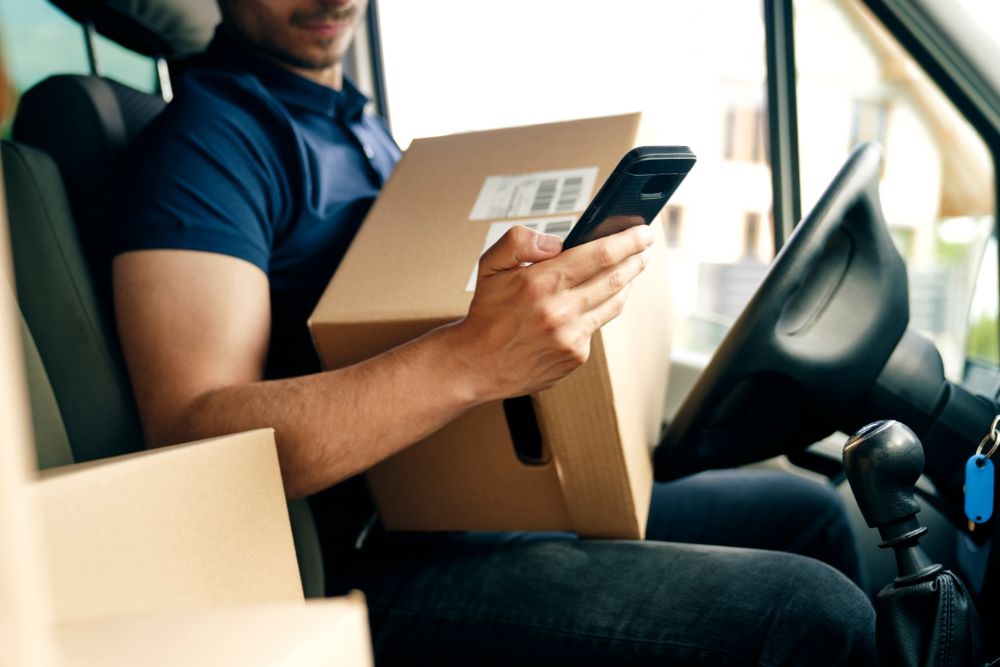
While home delivery remains the standard, Europe is rapidly building a parallel network of collection and pick-up points. Geopost alone reached 140 of these points on the continent by 2025, enough to leave 94% of the European population less than ten minutes from a pick-up location, according to the company itself . This is the advancement of the PUDO ( pick up, drop off ) model , which is already reorganizing the last mile abroad and is beginning to appear in conversations within the Brazilian digital retail sector.
For e-commerce, the point is straightforward: the final stage of delivery is usually the most expensive and the most prone to errors. Understanding how PUDO works helps decide if and when it's worthwhile to offer this alternative to customers.
In this article you will read:
PUDO: What you need to know now
- PUDO means pick up, drop offThese are physical locations (automated lockers, transport agencies, and partner stores) where consumers pick up or drop off orders instead of waiting for home delivery.
- The model targets the most expensive part of the operation.The last mile accounts for 41% of total logistics costs of the supply chain, according to Capgemini Research InstituteMuch of this is due to failed attempts.
- Infrastructure is growing rapidly in Europe.InPost ended 2024 with 46.977 lockers. 33% increase in a single year, according to the company's own figures.
- There are measurable environmental benefits.Concentrating deliveries in lockers can reduce costs by up to 32% CO₂ emissions compared to home delivery, according to the Norwegian Institute for Transport Economics (TØI).
- In Brazil, the situation is still in its early stages.: nearly 85% of deliveries are made via the home delivery model. (Grupo Clique, 2024), which indicates ample room for the format to grow.
What is PUDO and how does it work?
PUDO is the acronym for pick up, drop off : locations that function as both collection and drop-off points for packages. Instead of the delivery person going to the buyer's address, the package is available at a nearby location, and the customer picks it up at their convenience. These same locations often accept returns and mailings.
In practice, the consumer chooses the pick-up point at the time of purchase, receives a code or notification when the order arrives, and picks it up by presenting that code or an identification document. This process eliminates the main bottleneck in home delivery: finding someone at home.
Why does PUDO advance in the last mile?
The key to this model is logistics . When a delivery person takes dozens of packages to different addresses, each stop has a cost, and each absence generates a new attempt. At a PUDO point, several orders arrive at the same location and are picked up by the customers themselves, which reduces kilometers traveled, missed attempts, and route hours . It's no coincidence that the last mile accounts for 41% of the supply chain's logistics costs , according to the Capgemini Research Institute.
This design also improves the first-attempt success rate, an indicator that directly impacts the cost per delivery. Each redelivery means fuel, time, and often, a dissatisfied customer.
The European scale shows where the curve is heading. Beyond Geopost's 140 points, operators dedicated to lockers are advancing rapidly: InPost ended 2024 with 46.977 automated lockers, a 33% increase compared to the previous year. The denser the network, the closer the point is to the customer , and it is this proximity that makes the model attractive.
From the consumer's perspective, convenience and predictability explain the adoption. Picking up on the way home or to work, within ample time, avoids waiting for the delivery window. There is also the environmental argument: according to the Norwegian Institute for Transport Economics , replacing home deliveries with locker pickups can cut CO₂ emissions by up to 32%, provided the customer does not use their car solely to pick up the package.
PUDO's formats: locker, agency, and partner store.
The term PUDO encompasses different models, and each one is better suited to a particular type of operation.
| Format | How works | Best for |
|---|---|---|
| Automatic locker | Smart locker available 24/7; code retrieval, no attendant needed. | High-traffic areas and customers who want speed. |
| Shipping agency or post office | Counter with human assistance for pickup and shipping. | Lower density regions and those who prefer to be served |
| Neighborhood partner store | Local businesses that also function as collection points. | Neighborhood capillarity; generates extra traffic for the retailer. |
The choice is rarely exclusive. Mature networks combine the three formats to cover dense areas with lockers and expand reach with service points. Geopost, for example, reached 140 points by mixing approximately 100 partner stores and 40 lockers, indicating that network density, more than a single format, is what makes the model viable.
PUDO in Brazil: a market in formation
Brazil is still at the beginning of this curve. Estimates from Grupo Clique indicate that, in 2024, approximately 85% of deliveries followed the home delivery model, compared to only a few percentage points combined for in-store pickup, collection points, and lockers. This is the opposite of what is seen in more advanced European markets and, for that very reason, there is significant room for growth.
The backdrop favors progress. Brazilian e-commerce surpassed R$ 200 billion in 2025 and is expected to reach R$ 258 billion in 2026, according to ABComm. More volume means more pressure on the final stage. Pedro Moreira, president of Abralog, summarizes the challenge: the last mile is " one of the most expensive and complex stages of the distribution chain " and accounts for 40% to 55% of transportation costs, aggravated by urban congestion, municipal circulation restrictions, and a lack of delivery drivers.
In this context, PUDO (Public Deliverable Device) is increasingly becoming a viable solution to a concrete local problem: how to deliver more, at a lower cost, in congested cities. The combination of lockers in high-traffic areas with neighborhood stores acting as collection points is the most likely way to gain capillarity without relying solely on door-to-door delivery.
It's worth keeping an eye on this change.
PUDO is still young in Brazil, but the market trend is clear: the more e-commerce grows, the more expensive and competitive the last mile becomes, and the more value is gained by models that make it efficient. Understanding how these points work now helps digital retail prepare for the next phase of logistics.
To delve deeper into e-commerce logistics and operations, it's worth exploring other content on the e-Plus blog , where we closely follow the trends shaping digital retail.
FAQ
What does PUDO mean in logistics?
PUDO is the acronym for "pick up, drop off ." It refers to physical locations (such as automated lockers, agencies, and partner stores) where consumers pick up orders they purchased online or return items, instead of receiving everything at home. It's an alternative to traditional home delivery.
What is the difference between PUDO and locker?
The locker is one of the PUDO formats, not a separate concept. PUDO is the umbrella term for any collection and pickup point. The locker is the automated version, a smart cabinet with code access; while a partner agency or store is a PUDO point with human service.
Does PUDO reduce delivery costs?
Yes, when operated correctly. By concentrating multiple orders at a single point and transferring pickup to the customer, the model reduces mileage and failed delivery attempts, which are among the biggest costs of the last mile, responsible for 40% to 50% of distribution, according to Capgemini.
Does the PUDO model already operate in Brazil?
It works, but still on a small scale. Around 85% of deliveries in the country follow the home delivery model (Grupo Clique, 2024). Networks of lockers and collection points in partner stores have been expanding, driven by the growth of e-commerce and cost pressures in the last mile.