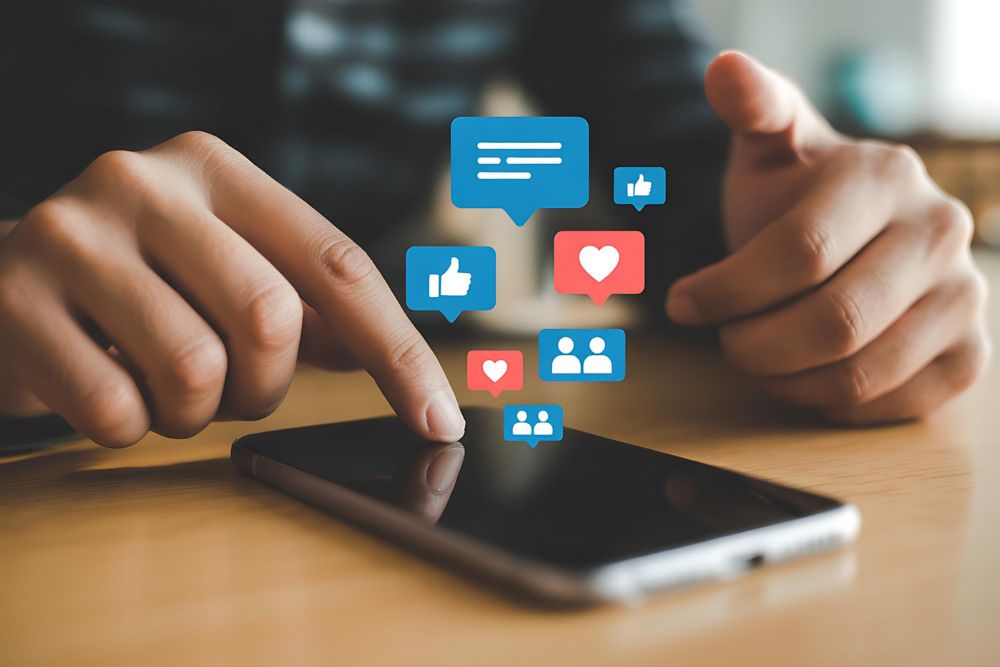
The way consumers decide where to buy has shifted. Before even opening a website, many people have already read reviews from other customers, and now they are also starting to read what artificial intelligence has summarized from those reviews . It is in this intersection that social proof with AI is born , where technology is used to collect, organize, and present reviews in a way that helps those about to buy. For digital retail, this movement has already become part of the operation.
The numbers explain the importance of this movement. In Brazil, 96% of consumers read reviews before choosing where to buy , according to the "Local Decision 2025" study by Reclame Aqui . Another 90% discard companies with a rating below 4 stars on Google . The "E-commerce Trends 2025 " survey by Opinion Box reinforces the weight of this behavior; 70% say that reviews directly influence their purchase decision . In the end, third-party opinions count more than the description written by the store itself.
On this page you will find:
Social proof with AI: what really changes?
- Social proof is any indication that other people have already purchased and approved the product. Notes, comments, customer photos, and number of sales recorded;
- AI steps in to handle volume: Where hundreds of reviews exist, it summarizes, sorts, and highlights what matters in seconds;
- Automatic summaries condense dozens of reviews into just a few lines., answering common questions without the customer having to read everything;
- Sentiment analysis separates praise from criticism and reveals patterns., what is pleasing and what usually leads to exchanges or returns;
- The same technology helps to flag suspicious reviews., a sensitive point for the store's credibility;
- None of this replaces a real evaluation: AI organizes the voice of the customer, it doesn't invent it.
What AI already does with automatic reviews and summaries.
The most visible use is the summary. E-commerce platforms and marketplaces have started displaying, at the top of the product page, a summary of reviews: quality, fit, durability, delivery time. The customer reads one sentence and understands the consensus , instead of scrolling to comment number forty.
Beyond summarizing, AI classifies reviews by topic, generates suggested responses for the customer service team, and transforms recurring questions into useful content directly on the page . There's also a moderation layer, with models trained to identify generic or repetitive texts that may indicate a fake review. This point has gained importance because distrust has grown at the same rate as technology.
The paradox of trust in the sales funnel.
Here's the part that retailers need to face honestly. AI makes reading easier, but consumers are still suspicious of it. A Bizrate Insights survey of over a thousand shoppers in November 2025 showed that 88% question the authenticity of reviews at least occasionally, and only 15% say they trust AI-generated summaries.
At the same time, behavior is evolving. The AI & The Click-less Customer report by Optimizely indicated that 42% of consumers trust AI-generated summaries without visiting the original website . The conclusion is that two audiences coexist: some already accept the summary as a final answer, while others only trust what comes from a verified buyer.
For those who follow operations on VTEX and Shopify , the message is straightforward. AI reduces friction in the middle of the funnel, but trust still comes from human evaluation. The automatic summary works when it points to the real review, not when it replaces it.
How to use social proof with AI without losing credibility.
The main recommendation starts with transparency . Make it clear that the summary was generated from real reviews and keep the path open to read the full comments. Bizrate Insights itself recorded that 91% of consumers would trust reviews with a verified buyer badge more , a simple feature to implement that supports the summary.
Next, use AI for what it does best: organizing. Let it group reviews by topic, highlight frequently asked questions, and populate the product page's FAQ. This improves the shopping experience and also benefits SEO because it answers specific questions that people actually search for. The same care should be taken when bringing these reviews to social media, where 66% of Brazilian consumers research before buying , according to Opinion Box.
Finally, close the loop . Responding to reviews (including negative ones) weighs heavily in the decision; a study by Reclame Aqui showed that 76,5% of consumers consider a company's response fundamental to making a purchase . AI can suggest these responses, but the brand needs to review them and give them a human voice. Social proof that abandons the customer after the purchase loses precisely what makes it trustworthy.
The effect on the indicators appears in the middle and at the end of the funnel. Less doubt before checkout tends to improve the conversion rate and reduce the return rate , since expectations are more aligned with the product that will be delivered. That's where social proof starts working for revenue.
Retailers who treat reviews as a strategic asset gain a competitive edge. Technology helps with scaling, but the purchase decision remains anchored in trust , and trust is built on genuine evaluation, attentive responses, and clarity about what is customer opinion and what is machine-generated information.
Want to delve deeper into the subject? Explore other content on the e-Plus blog about shopping experience, conversion, and the use of AI in e-commerce; each topic helps build an operation that sells more because people trust it more.
FAQ – Social Proof with AI
What is social proof with AI?
Social proof with AI is the use of artificial intelligence to collect, organize, and summarize customer reviews, helping consumers make purchasing decisions more quickly. The technology synthesizes reviews, identifies opinion patterns, and highlights the essentials, always based on real reviews left by those who have already purchased the product.
Are AI-generated review summaries reliable?
AI-generated summaries are reliable when they are backed by genuine reviews and provide access to full comments. Research from Bizrate Insights indicates that only 15% of consumers fully trust these summaries, reinforcing the importance of displaying the source and using verified buyer badges.
How do reviews influence conversion rates?
Reviews influence conversion by reducing uncertainty before purchase. When customers find clear and organized opinions, they decide faster and with less apprehension. According to Opinion Box, 70% of Brazilian consumers say that reviews directly influence their purchasing decisions in e-commerce.
Is it worth responding to negative reviews?
Yes, responding to negative reviews is part of social proof. A thoughtful response shows that the brand is following up with the customer and resolving problems. The Reclame Aqui Local Decision 2025 study indicates that 76,5% of consumers consider the company's response crucial when choosing where to buy.