What is Linx? A Brazilian retail software company, including an e-commerce platform.
What is Linx? It is a Brazilian software company for offline and online retail. It was founded in 1985 by Nércio Fernandes. It has headquarters in São Paulo and branches in multiple cities around the world, which makes it a multinational.
Within its more than 30 years of experience in the market, Linx has made a series of partnerships and acquisitions that have allowed it not only to improve its original software but also to include more in its catalog.
Linx sells systems mainly for three different areas, they are:
• Physical retail
• Payment options
• Digital Transformation
Finally, it is precisely in the Digital Transformation wing that one of its main software is currently found, the Linx Commerce platform.
What is Linx Commerce?
What is Linx Commerce? It is an e-commerce platform that enables the development of online retail businesses integrated with offline retail in formats such as:
• B2B : your company sells products and services to other businesses;
• B2C : your company sells products to the end consumer;
• Marketplace : You sell on a marketplace or create your own marketplace.
What is Linx? A company that has a system that enables the creation of virtual stores and marketplaces.
This platform has unique features with which an entrepreneur like you will be able to develop an omnichannel commerce with much more practicality.
Linx Commerce platform features
The following are features of the Linx Commerce platform :
• 100% editable layout : allows you to create online stores with a unique design.
• ERP Integration : Enables omnichannel management of online and offline sales channels.
• Integration with marketplaces : connection with more than 15 online shopping malls.
• Mobile Inclusion : allows you to create online stores adapted for mobile technologies.
• Easy checkout : a user-friendly, responsive, and fast process that generates more conversions.
• Promotions engine : various native promotional options on the platform
• SEO friendly : best practices for indexing sales pages on Google
• Multi-Store : allows you to create and manage more than one store using a single panel.
• Scalability : high-performance infrastructure geared towards growth.
In addition, Linx Commerce allows a user like you to generate more than 50 types of reports, which are essential for your business intelligence. Finally, it is worth remembering that this platform is constantly updated, which keeps it as one of the most modern on the market.
How to create a virtual store with Linx Commerce platform?
To create an e-commerce site with Linx Commerce it is necessary, first of all, to know the system. To do so, you can take a course, which will certainly consume learning and adaptation time.
However, there is a faster way to get your online store up and running. This involves hiring a certified e-commerce agency . The e-Plus Agency, for example, will obtain its certification in early April 2019.
Once the certification is in hand, the e-Plus team will be able to develop and manage virtual stores using the Linx Commerce platform. In fact, this agency has been in this business for over 5 years, having produced over 50 stores since then.
• Also access and read the article “ Definition of e-commerce ” and learn the true concept of electronic commerce.
For example, e-Plus has in its customer catalog EW Cosméticos, a virtual store produced with the EZ Commerce platform, which was acquired by Linx in mid-2018. Therefore, this agency is already halfway there.
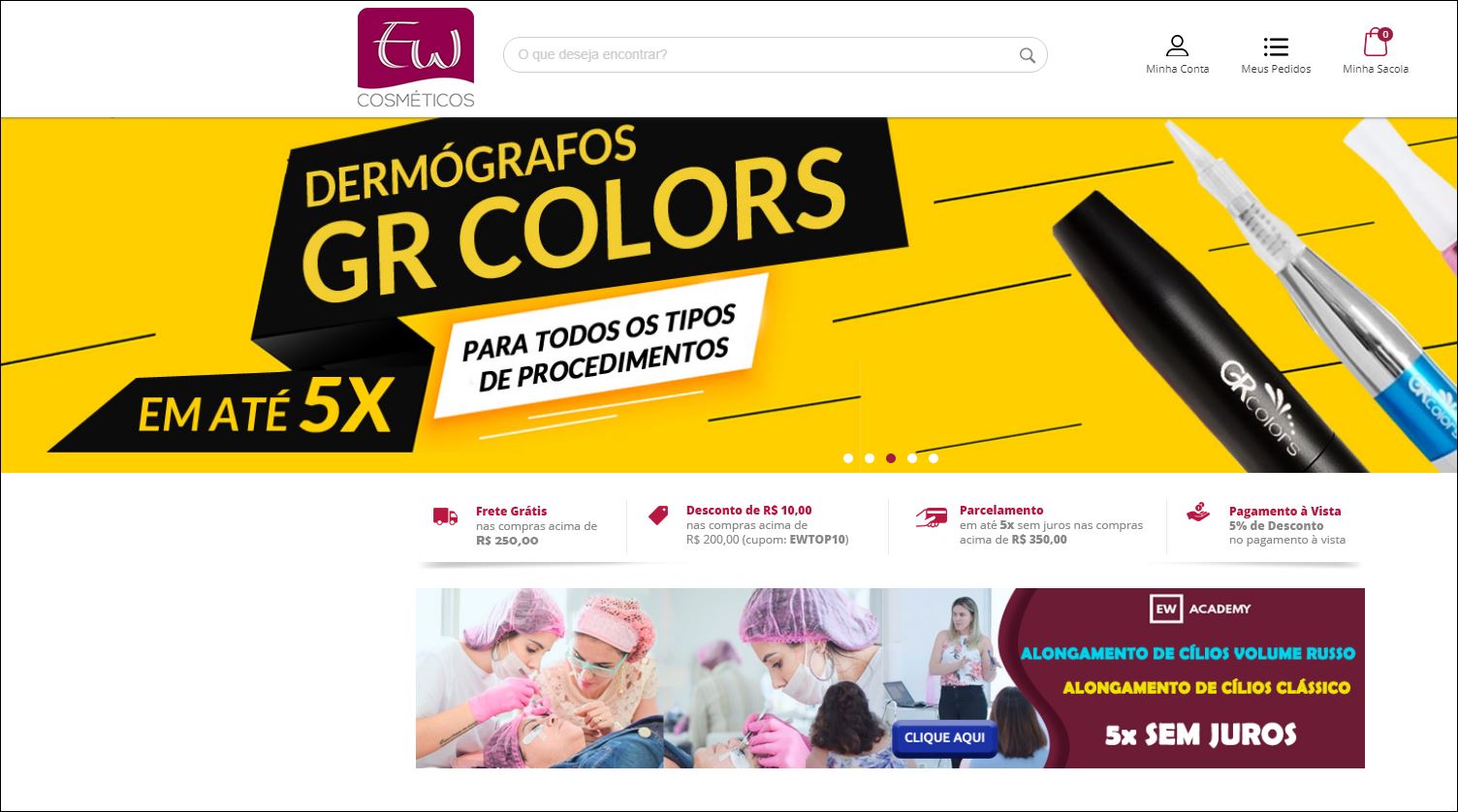
What is Linx? Company that purchased EZ Commerce, an e-commerce platform used by e-Plus to create the EW Cosméticos virtual store (see image).
In any case, to learn more about the e-Plus Agency's implementation service, access and read the article " Steps for developing an online store " and stay informed.
Companies that already use the Linx Commerce system
These are companies that already use Linx Commerce technologies:
• Brascol
• Commercial Merit
• Miami Store
• Dakota
• Le Lis Blanc
In total, Linx has over 1.000 stores that utilize its omnichannel technologies. Perhaps yours will be next, without a doubt. Together, these stores generate R$ 2 billion in revenue annually.