
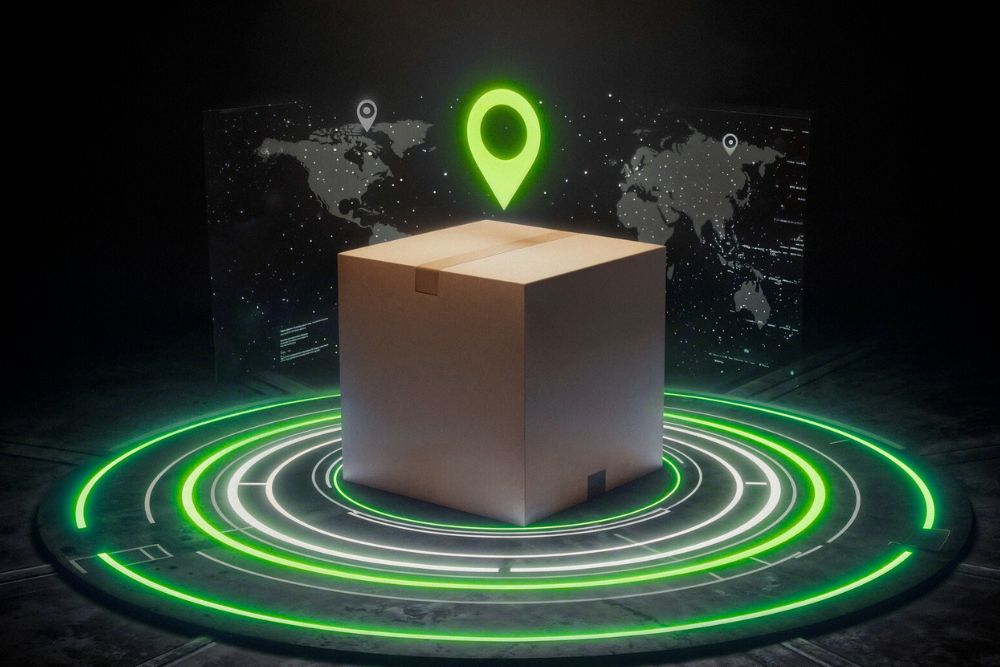
The moment a customer clicks "complete purchase" doesn't represent the end of the transaction, but the beginning of the most sensitive phase of the journey: the anxiety about delivery . In a highly competitive market, intelligent logistics has ceased to be a mere operational cost center and has become the main strategic differentiator of digital retail.
Today, online shoppers no longer tolerate a lack of communication, silence from the store, or the imposition of rigid deadlines. They demand absolute predictability and, above all, the power of choice. Consequently, e-commerce businesses that neglect the visibility of this stage suffer from a sharp increase in customer service calls and destroy the chance of customer loyalty . Therefore, restructuring your shipping operation is the definitive way to transform delivery expectations into your greatest tool for recurring revenue.
WHAT YOU NEED TO KNOW ABOUT THE POST-PURCHASE EXPERIENCE
- What is it: Intelligent logistics is the application of technology and data analysis to optimize the entire distribution chain, from order picking to final delivery to the consumer.last mile);
- Power of choice: Today's customer wants the freedom to choose between a more economical shipping option with an extended delivery time and express delivery for an additional fee;
- Curing anxiety: Proactive, real-time tracking via WhatsApp or email eliminates buyer "blindness" and drastically reduces support tickets;
- Fluid reverse logistics: A hassle-free, bureaucratic return and exchange process provides immediate reassurance, encouraging higher-value purchases;
- Retention motor: A punctual and transparent delivery experience boosts the store's repurchase rate.
THE ERA OF FLEXIBILITY: SPEED VS. FREE SHIPPING
Here at e-Plus, we've observed that shopping cart abandonment frequently occurs at the shipping cost calculation stage. The lack of delivery options drives buyers away almost instantly. Recent data from the global E-commerce Delivery Compass 2025 report , conducted by Sendcloud , reveals that 82% of consumers choose free shipping over speed, even if it means waiting a few extra days . However, a highly profitable segment of the public is fully willing to pay extra fees to receive the product within 24 hours.
A common challenge in digital expansion projects is precisely balancing this financial equation. To solve this problem, your online store needs to integrate dynamic shipping gateways . This technology queries dozens of partner carriers in milliseconds and presents a diverse range of choices on the user's screen . In this way, you perfectly serve both the price-sensitive customer and the one driven by immediate urgency.
THE VALUE OF TRACKING
Leaving the customer in the dark after payment is the biggest mistake a brand can make. The same Sendcloud study points out that 74% of buyers feel great frustration when delays occur without any prior communication or updates from the merchant . When the company adopts a reactive stance, waiting for the customer to complain on social media, the relationship of trust is irreversibly broken.
Adopting a traceable infrastructure transforms this negative scenario . The management system should trigger automated notifications with each change in the logistics package's status. Furthermore, if there is a real unforeseen event on the route, the customer needs to be the first to know , immediately receiving a new delivery estimate. This proactive transparency not only reassures the consumer but also transforms an operational problem into a clear demonstration of professionalism.
The difference between traditional logistics and smart logistics.
To help you better understand the difference in approach that dictates the success of a modern sales operation, we have prepared the following comparison table.
| Strategic characteristic | Traditional logistics | Smart logistics |
| Delivery options | Rigid (only one carrier and a fixed deadline) | Flexible (multiple carriers, pickup points and modes of transport) |
| Post-purchase communication | The customer needs to go to the website and type in long codes. | The store sends automatic updates via WhatsApp and email. |
| Managing delays | The store only takes action when the customer files a complaint with customer service. | The system alerts the customer before the deadline expires and recalculates the route. |
| Exchange process | Bureaucratic, manual, and dependent on lengthy approval processes. | Automated and initiated by the customer themselves with just a few clicks. |
The financial impact on customer retention.
Ultimately, efficiency at the end of the supply chain determines the financial future and scalability of your business. Recent studies on consumer behavior, such as those published by Riverty in 2025, indicate that 58% of buyers permanently abandon a brand after experiencing recurring delivery frustrations . Therefore, the Customer Acquisition Cost per Channel (CAC per channel) is completely wasted when the customer does not return for a second purchase . On the other hand, the delight generated by a package that arrives flawlessly and is well-tracked seals the user's loyalty forever.
Therefore, we invite you to explore other content on the e-Plus blog to continue refining your strategy and mastering best practices in the e-commerce market. Follow our articles to discover how to boost sales and the efficiency of your digital operation with end-to-end intelligence.
FAQ – FREQUENTLY ASKED QUESTIONS
What is smart logistics in e-commerce?
Intelligent logistics is the strategic use of technologies, automation, and data analysis to manage product shipping. It ensures that the company offers dynamic shipping options, automated real-time tracking, and faster, more economical delivery routes.
Why is the post-purchase experience so important?
The post-purchase experience is important because it's the moment of greatest anxiety for the customer. Clear communication and efficient shipping ensure user satisfaction. Consequently, this increases trust in the brand, reduces support calls, and significantly increases the likelihood of repeat purchases.
How does proactive tracking reduce operational costs?
Proactive tracking reduces costs by sending automatic order updates directly to the customer's mobile phone. Because the consumer knows exactly where their package is, they don't need to call or message the store, relieving the entire customer service team.


