
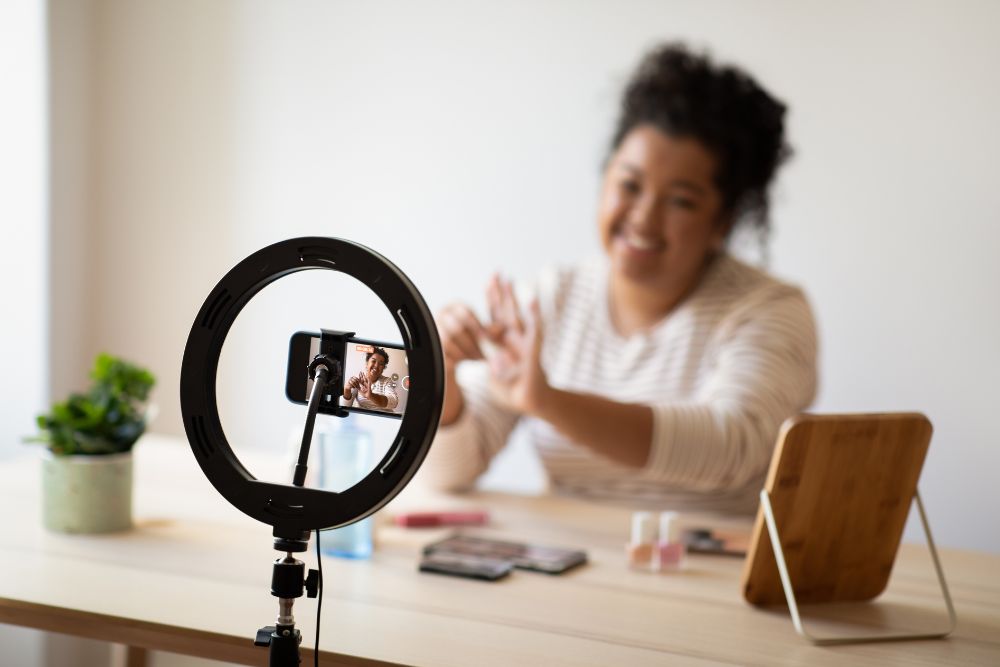
The global live commerce market is expected to grow at an average of 41% per year until 2033 , according to Grand View Research . This figure disproves the idea that live selling was a pandemic fad. It has become a consolidated revenue channel, albeit with very different levels of maturity in China, the United States, and Brazil . For those who sell online, the question now is " where does this format deliver real results? ".
On this page you will find:
The essentials before betting on the format.
- Live commerce is the sale of products during a live broadcast., with a shopping cart integrated into the live stream itself. The purchase happens at the moment of discovery, without the customer leaving the screen;
- Conversion rates often surpass those of traditional e-commerce: a McKinsey It points to rates up to 10 times higher in live streaming than in regular browsing;
- In Brazil, 31% of consumers have already shopped via live commerce., according to a survey by CNDL/SPC Brazil. It's a significant adoption for a format that's still relatively new here;
- The channel will acquire infrastructure in 2025: o TikTok Shop arrived in the country in May and YouTube Shopping It began operating with Mercado Libre and Shopee, shortening the path between watching and buying;
- Not all catalogs benefit equally: Live streams are more profitable on commercial dates, product launches, and for products that require demonstrations or answer questions in real time.
Why live streaming sells more than product pages.
The difference lies in the time frame. In a traditional store, the customer reads the description, looks at the photos, and decides on their own. In a live stream, a person demonstrates the product in use, answers questions in real time, and creates a sense of opportunity that a static page cannot achieve. A question answered immediately means an objection is overcome before the customer gives up.
Brazilian data reinforces this. According to VTEX , in the first half of 2023, GMV generated by live commerce tripled compared to other channels in the same period, and orders from broadcasts grew by 40% . It's not just about volume; live sales tend to bring the brand closer to the audience, with an interaction more akin to in-store service than a cold checkout process.
Live commerce: where is it worth investing in 2026?
The format doesn't solve everything, and treating it as a universal solution is the quickest path to empty broadcasts. Its best use emerges when there's novelty, visual appeal, and an audience already willing to watch.
| Where live streaming is most profitable | Where it tends to disappoint |
|---|---|
| Commercial and seasonal dates (Customer Day, Black Friday) | Rational and recurring purchase, as a replacement |
| New releases and collections | A catalog lacking novelty and visual appeal. |
| Products that require demonstration (home, beauty, fashion) | Very low ticket price, with no margin for production. |
| Brands with an active community on social media. | Non-existent or completely inactive audience. |
The starting point is rarely the studio setup; it's having an audience and a reason to succeed. A brand with engaged followers and a new product up its sleeve will reap greater rewards from a simple live stream than a generic catalog with expensive production.
What to measure to know if it worked
Total revenue from a live stream says little on its own. It's worth tracking the live stream's conversion rate , average viewing time , revenue per stream , and purchases made by those who accessed the channel. These indicators show whether the audience is actually buying or just watching.
An example that supports the argument.
Coqueluche Casa , an e-Plus client, has transformed its commercial calendar into live sales events. The brand hosts live streams on occasions like Father's Day and Black Friday, and repeated the strategy for its Customer Day broadcast on September 15th . What sustains the results isn't improvisation, but recurrence. The audience already knows that on those dates, it's worth watching.
It's worth investing in, but with caution.
Live commerce works, and the growth numbers leave no doubt about it. The mistake isn't entering the channel, but rather entering without an audience, without a date, and without a product that a live demonstration can enhance. By 2026, the format will cease to be a gamble and become a strategic decision: where there is community and seasonality, it deserves a place in the planning . Where there isn't, the effort will pay off more in other channels.
Want to structure your calendar of business dates before going live? Explore other content on the e-Plus blog about seasonal planning and e-commerce performance ; it will help you decide when to go live.
FAQ
Will live commerce still work in 2026?
Yes. The global live commerce market is growing at double-digit rates annually, and the format converts more than traditional e-commerce, according to data from McKinsey and Grand View Research. In Brazil, adoption is advancing with TikTok Shop and YouTube Shopping, but the results depend on audience size and the type of product sold.
Which products sell best in a live stream?
Products that benefit from real-time demonstrations and responses, such as home goods, beauty products, fashion, and new collection releases, perform better. Categories of rational and recurring purchases, such as restocking household inventory, perform less well because the customer doesn't need live context to make a decision.
Do I need a large structure to get started?
No. A simple live stream with a good product, an engaged audience, and a date that makes sense is better than expensive broadcasts without an audience. Production can grow as results appear. The essential thing at the beginning is to have a reason to broadcast and people willing to watch.
What is the difference between live commerce and social selling?
Live commerce is selling within a live stream, with a shopping cart integrated into the live stream itself. Social selling is broader: it uses relationships on social media to sell over time, through content, messages, and community. The live stream is an event; social selling is continuous.


