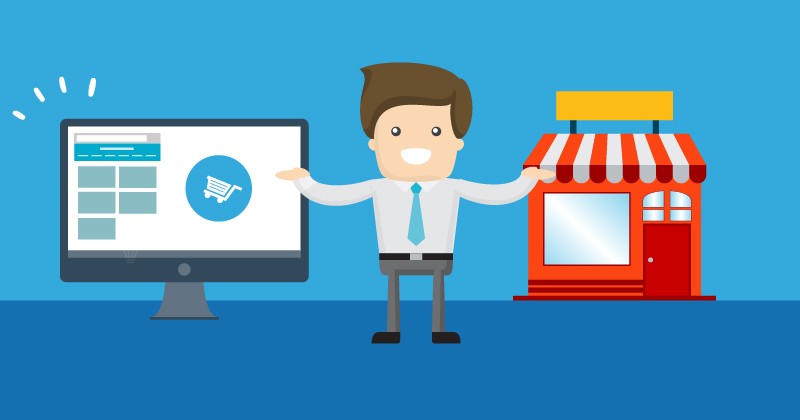
Integrating a physical and virtual store can be easier than creating an e-commerce without having a physical store
Integrating physical and virtual stores can increase the success of your retail business both online and offline. Certainly, more and more retailers are finding this to be very true.
According to a study by BigData Corp, the creation of e-commerce has increased by 12,50% in the last 12 months. As a result, 75 new virtual stores have been implemented since April 2017. Many of them belong to entrepreneurs like you, who own physical stores.
And the process of implementing e-commerce is much easier for those who already have a physical store, because in this case:
• The brand is already created;
• The company is already open;
• Active customer base already exists.
Thus, it is enough for the retailer to focus on the creation of e-commerce and its integration with the physical store.
Finally, to integrate physical store and virtual store it is necessary to make use of a good software of the Enterprise Resource Planning (ERP) type. In this way, with this system, you will be able to get a holistic view of your entire business online and offline.
Advantages of integrating physical and virtual store
Among the benefits of integrating physical store and virtual store we have the following:
• Uninterrupted operation:
In physical retail, the store is open 8 to 16 hours a day, from Monday to Saturday. Meanwhile, an e-commerce site remains open 24 hours a day, every day of the year.
• Greater coverage:
Your physical store operates regionally, but the virtual store may cover the entire national territory. The latter will also be able to act internationally (if you want).
• More payment methods:
Physical retail employs traditional payment methods. Online retail, on the other hand, relies on new payment methods such as Apple Pay , PayPal, Stelo, and even cash on delivery. This expands the number of consumers able to purchase their products.
• Self-service enables ubiquity:
In physical stores, you need to maintain one or more salespeople and cashiers. This does not occur in a virtual store, as the online consumer provides self-service. Therefore, in the virtual store, people can buy alone from the queue at the bank, from the sofa at home, from within public transport, that is, from anywhere.
• More touchpoints:
Your physical store depends on face-to-face, phone or email contact. A virtual store, on the other hand, offers expanded possibilities such as online chat, e-commerce blogs, social networks, E-mail Marketing and much more.
• Reinforcement of the credibility of your business:
People like to know the physical address of an e-commerce website before making a purchase. This gives them more confidence and a guarantee that they won't be scammed. Therefore, the physical store address provides more credibility for the online store. Conversely, e-commerce businesses can use the e-commerce blog feature to answer customer questions for free, which also generates trust and fosters customer loyalty on both sides.
• Omni-channel Experience:
Sales occur through various channels that combine and integrate. In this way, you can sell products in your online store and work with pickup points in your physical stores . Similarly, your physical stores can be used as exchange points for defective or unsuitable products purchased from your online store. In other cases, consumers may research products in your online store and later buy them in your physical store, and vice versa.
• Expanded Marketing:
By integrating physical and online stores, it's possible to use the same digital marketing strategies to promote your e-commerce business as well as your physical stores. Conversely, you can also promote your online store through printed materials such as flyers, business cards, and posters that are commonly used to advertise physical stores.
• Big data:
Each access and each purchase, whether in the online or physical store, generates information about consumer behavior, which can be stored in Big Data Analytics software. Once compared and interpreted, this data can be used to generate new opportunities, new business and to improve your processes, your products and to train your people.
• Marketplaces:
In the online environment, you will be able to insert your store in Marketplaces and thus promote your brand side by side with major market players such as Americanas, Shoptime and Casas Bahia, for example.
Conclusion
As seen, integrating physical and virtual stores can increase the potential of your online and physical business. In this way it will be possible to take your company as a whole to another level, with more sales, more profits and more success.