
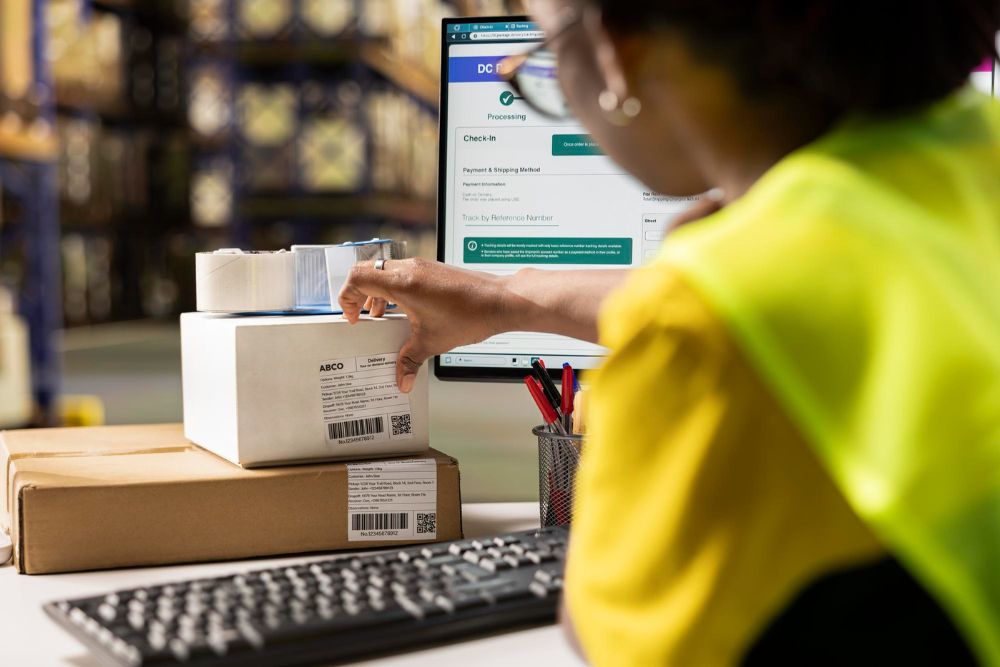
The digital market is poised to break historical financial revenue records. In fact, recent projections from Mordor Intelligence , highlighted in analyses by the Exame portal , indicate that the e-commerce sector will reach an impressive US$69,2 billion in revenue by 2026. However, this massive sales volume hides a silent technical danger for inattentive retailers. Generally, a lack of solid technological infrastructure and uncontrolled payment flows quickly erode profit margins. Consequently, companies that grow without investing in automated reconciliation face very severe operational losses. Therefore, understanding how to structure the systemic backstage of your online store is the only way to scale with absolute profitability and real security.
What you need to know about e-commerce and its risks.
- What is it: Operational risk in digital retail occurs when sales volume exceeds the store's technological capacity to manage payments, inventory, and logistics in a synchronized manner.
- Accelerated growth: The market will reach tens of billions globally and regionally, driven by the ease of new, fast transactional methods;
- The Pix factor: Furthermore, innovations such as Pix Open Finance accelerates sales, but generates complex data volumes that require real-time financial management;
- Consequences of the delay: Operations without interconnected systems constantly suffer from bank reconciliation failures, fraud approvals, and invisible inventory discrepancies;
- Mandatory integration: The ultimate solution requires connecting your sales channel natively to your ERP (enterprise resource planning) and financial platforms.
The Illusion of High Revenue Without System Integration in E-Commerce
Firstly, in our experience implementing digital architectures, we've observed that selling a lot doesn't necessarily mean making a profit . For example, retailers who scale traffic campaigns without a prepared back office quickly deal with excessive returns and chargebacks. According to official projections from Ebanx , Pix is expected to account for an impressive 40% of all online payments in the country by the end of the year . Therefore, the breakneck speed of this transaction demands equally instantaneous financial reconciliation to avoid disrupting the logistics of shipping.
On the other hand, a common challenge in platform migration projects is precisely the lack of systemic vision on the part of managers . Often, they invest the entire budget only in the visual aspects of the online store, ignoring the technical need to integrate the payment gateway with the internal operational control system. In this way, the company loses control over high-impact metrics, such as the real conversion rate (fraud-free) and the churn rate (cancellation rate) caused by slowness and internal systemic errors . As a result, the digital business simply burns through cash unnecessarily.
Fragmented Operation vs. Integrated E-Commerce
To better understand the structural differences that define who survives this new wave of high transactional volume, we have created the table below . It highlights the stark contrast between high-risk manual processes and high-performance, scalable operational models.
| Strategic characteristic | Fragmented operation | Integrated e-commerce |
| Payment reconciliation | Manual, slow, and highly vulnerable to human error or fraud. | Automated in real time, natively connecting the bank, platform, and ERP. |
| Data visibility | Incomplete, leading to decisions based on outdated financial reports. | Centralized and clean, allowing for immediate adjustments to campaigns and inventory. |
| Impact on the consumer | Delays in order approval and frustration with the shopping experience. | Instant approval and seamless tracking from the first click on the website. |
| Vital metric affected | Time-to-Market high and Return on Ads (ROAS) completely inaccurate. | Time-to-Market Agile and ROAS measured with absolute financial accuracy. |
The real competitive advantage: control and accurate data.
In short, your brand's financial success will not depend solely on the number of visitors your website attracts daily through expensive campaigns . In fact, the competitive advantage in the coming years will be the ability to automate internal processes in a completely secure way . Furthermore, interpreting financial data quickly allows you to apply aggressive discounts or change logistical routes without harming your net profit margin. In other words, cutting-edge technology should actively act as a protective shield for the revenue generated by your marketing teams.
Therefore, there's no point in celebrating record revenue if systemic failures wipe out all your project's profits at the end of the month. With that in mind, we invite you to explore other content on the e-Plus blog to continue refining your strategy and mastering your digital operations. Now, if your project requires immediate traction and you want to avoid losses, talk to our team of experts . e-Plus offers definitive solutions for implementation, platform migration, and continuous improvement to future-proof the infrastructure and intelligence of your online business.
FAQ – FREQUENTLY ASKED QUESTIONS
What are operational losses in e-commerce?
Operational losses are financial losses caused by technical or human errors in the internal processes of the online store. These include errors in payment reconciliation, fraud approved due to a lack of robust anti-fraud systems, incorrect returns, and failures in inventory synchronization with the ERP system.
How does a lack of integration affect the conversion rate?
Lack of integration affects conversion rates by creating serious friction points at checkout. Unstable platforms or slow, non-integrated payment gateways cause customers to abandon their shopping carts, wasting all previous investment in attracting customers and paid media.
Why migrate to a more robust e-commerce platform?
Migrating to a more robust platform ensures system stability for scaling high-volume sales. A modern architecture automates complex financial flows, seamlessly connects multiple sales channels, and protects the company's operating profit margin against transactional errors.


