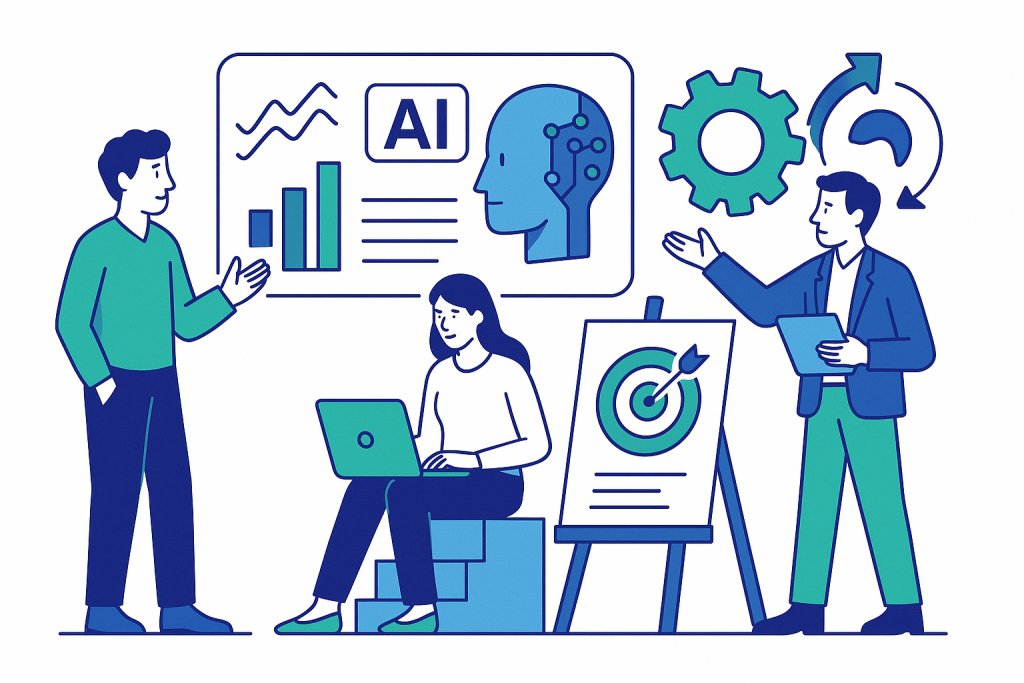
In recent years, Artificial Intelligence has gone from being just a topic of innovation to becoming a central pillar of competitiveness. Companies in all sectors are realizing that adopting AI is no longer an option, but a necessity to continue growing and remaining relevant.
However, implementing AI without a strategy is a common mistake. Many businesses start by investing in isolated tools, without a clear purpose or adequate data structure, and end up frustrated with the results.
In this article, you will learn how to prepare your company to adopt Artificial Intelligence in a solid, sustainable, and strategic way, guaranteeing real returns and a competitive advantage.
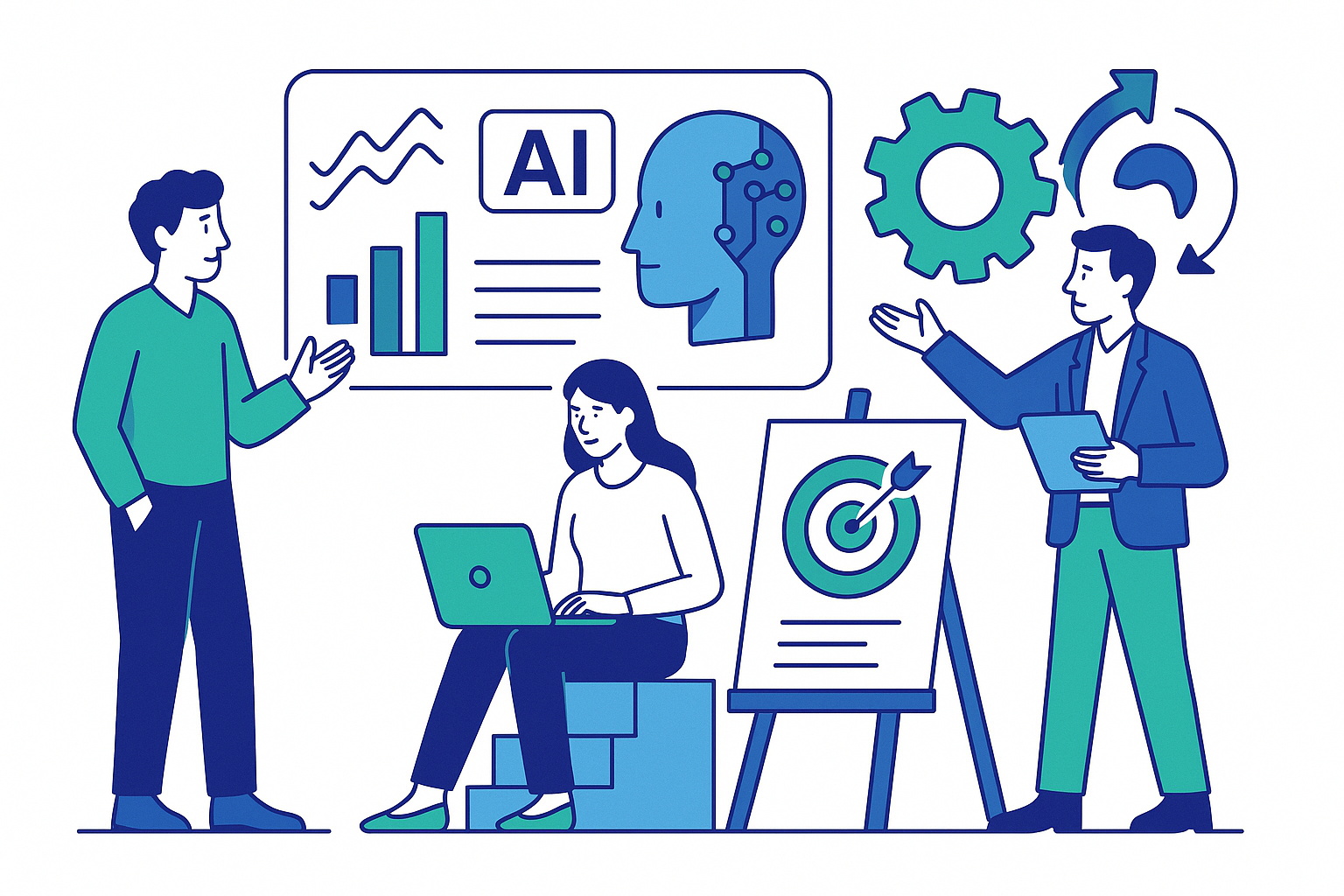
The starting point: mindset and purpose.
Before even thinking about technology, we need to start with what drives successful companies: mindset. Adopting AI requires a culture open to innovation, continuous learning, and adaptation.
The right question isn't "which AI tools should I use?", but rather "what strategic problems do I want to solve with AI?". Companies that start with this focus have a much greater chance of success because they treat technology as a means, not an end. AI should serve the purpose and goals of the business, not the other way around.
This initial clarity guides all subsequent decisions: where to invest, how to structure data, which processes to prioritize, and how to measure results.
Data structures: the fuel of AI.
Without data, there is no Artificial Intelligence. Algorithms learn based on information and examples, and the more organized and relevant this data is, the more intelligent the system will be.
Therefore, the first practical step is to structure the company's data ecosystem.
This involves:
- Centralize information that is scattered across different departments.
- Ensure that the data is reliable, up-to-date, and standardized.
- Define clear privacy and governance policies.
- Choose tools that allow integration between systems.
Companies that neglect this step end up limiting the potential of AI. Without clean and accessible data, predictions and analyses lose accuracy. Think of data as fuel: it's no use having the most modern car if the fuel is of low quality.
The importance of integration between areas
Another common mistake is treating AI as a project exclusive to the technology sector. In reality, it needs to involve all areas: marketing, sales, finance, operations, customer service, and even HR.
AI only delivers real results when integrated into business strategy. And that requires multidisciplinary collaboration. For example, a sales automation project will only be effective if the sales team helps define lead qualification criteria.
Similarly, a demand forecasting model requires the involvement of the logistics and supply chain area. Success comes when the company understands that AI is a collective effort, not just a technical one.
Diagnosis: Where AI can have the biggest impact
Before investing in large projects, it is essential to identify where AI can deliver the fastest and most significant gains.
To do this, conduct an internal assessment and answer the following:
- Which processes consume the most time and resources?
- What decisions are still made based on assumptions?
- Where are the bottlenecks that could be resolved with automation or predictive analytics?
These answers reveal the areas with the greatest potential. Starting with areas that yield tangible results helps engage leadership and justify new investments.
Eg
- In marketing, AI can automate campaigns and predict customer behavior.
- In financial terms, it can anticipate defaults and optimize cash flow.
- In customer service, it can reduce costs and increase satisfaction.
The key is to choose a strategic pilot project.
Choosing the right technologies and partners
After understanding the needs and defining the priorities, it's time to choose the solutions.
And here's an important warning: There is no single tool that solves everything..
Ideally, you should seek experienced partners and flexible technologies capable of adapting to the reality of your business. Many companies make the mistake of adopting off-the-shelf solutions without considering integration, scalability, and the maturity of their internal processes.
At e-Plus, for example, we combine Big Tech technologies with custom development. This allows us to create solutions tailored to each sector and strategic objective, without relying on rigid platforms.
Choosing the right partners is just as important as choosing the right technology. Give preference to those who understand business, not just AI.
The role of leadership in transformation.
No technology thrives without the support of senior leadership. Implementing AI requires a shift in mindset that must begin at the top.
The CEO, directors, and managers need to understand the strategic value of artificial intelligence and communicate this clearly to the team. When leadership is actively involved, buy-in is natural and the process becomes more fluid.
More than investing in software, it's about investing in culture and vision. Companies that treat AI as an executive priority reap faster and more consistent results.
Training and digital culture
Artificial intelligence doesn't replace people. But it completely changes the way they work.
Therefore, it is essential to empower teams so that they know how to use the new tools and interpret their results. This includes training managers to make data-driven decisions and promoting a mindset of continuous learning.
Digital culture isn't about knowing how to use tools; it's about thinking analytically and adaptively . It's about learning to test, measure, and adjust based on evidence. Companies that invest in internal training are able to extract maximum value from the technologies they adopt.
Governance and ethics in the use of AI.
Adopting AI also means taking responsibility for the use of data and automated decisions. Therefore, governance is an essential pillar.
It is necessary to ensure that information is used ethically, transparently, and in accordance with data protection laws, such as the LGPD (Brazilian General Data Protection Law). Furthermore, it is important to establish human review criteria for critical decisions, especially when they involve people.
AI should be an ally of integrity and transparency. Companies that use technology responsibly build trust and strengthen their reputation.
Phased adoption: from pilot to scale
The implementation of Artificial Intelligence should happen gradually. Start with a well-defined pilot project , with clear goals and indicators. Evaluate the results, make adjustments, and only then expand the use of AI to other areas.
This approach reduces risks and ensures learning at every stage. Over time, the company develops digital maturity and begins to use AI in a more autonomous and strategic way.
A good example is a retail chain that started by automating email marketing campaigns with AI. After proving the increase in conversion rates, it expanded its use to dynamic pricing and product recommendations. In two years, it managed to reduce media costs by 30% and increase the average order value by 25%.
How to measure the success of AI adoption
To know if the strategy is working, it's necessary to monitor clear indicators. The main ones are:
- Reduction of operating costs
- Increased process efficiency
- revenue growth
- Improved customer satisfaction
- Reducing response time in decision-making.
More than isolated metrics, what's important is observing continuous evolution. AI is a journey of improvement, not a project with a defined end.
The future of AI in business
The trend is for Artificial Intelligence to become invisible, naturally incorporated into all areas of the company. It will cease to be a tool and will become part of the corporate DNA.
The businesses of the future will not only use AI, but Thinking with AI.
They will make decisions in real time, based on integrated data and continuous learning.
Companies that prepare now will be far ahead when this new reality takes hold.
Conclusion
Adopting Artificial Intelligence isn't about technology, it's about a vision for the future. It's about transforming how the company thinks, decides, and grows.
The secret lies in the combination of culture, strategy, and execution. Companies that begin by structuring their data, empowering teams, and connecting technology to purpose reap sustainable results and become benchmarks in innovation.
AI is no longer the future. It is the present for those who want to lead tomorrow.
Quick FAQ
1. Can all companies use Artificial Intelligence?
Yes. AI can be adapted to the reality and size of any business, provided there is data and a strategy.
2. Where to begin?
Start with a diagnosis and a pilot project in a strategic area, such as marketing or customer service.
3. Does it require a lot of investment?
Not necessarily. It's possible to start with affordable solutions and evolve as the return on investment appears.
4. Does AI replace jobs?
It replaces repetitive tasks, but creates new roles focused on analysis and strategy.
5. How can we ensure that AI is used ethically?
With data governance, transparency, and human review in critical processes.
Do you want to prepare your company for the future with Artificial Intelligence?
e-Plus helps you implement AI strategically, safe and aligned with business objectives. Chat with e-Plus And see how to transform your company with Artificial Intelligence.