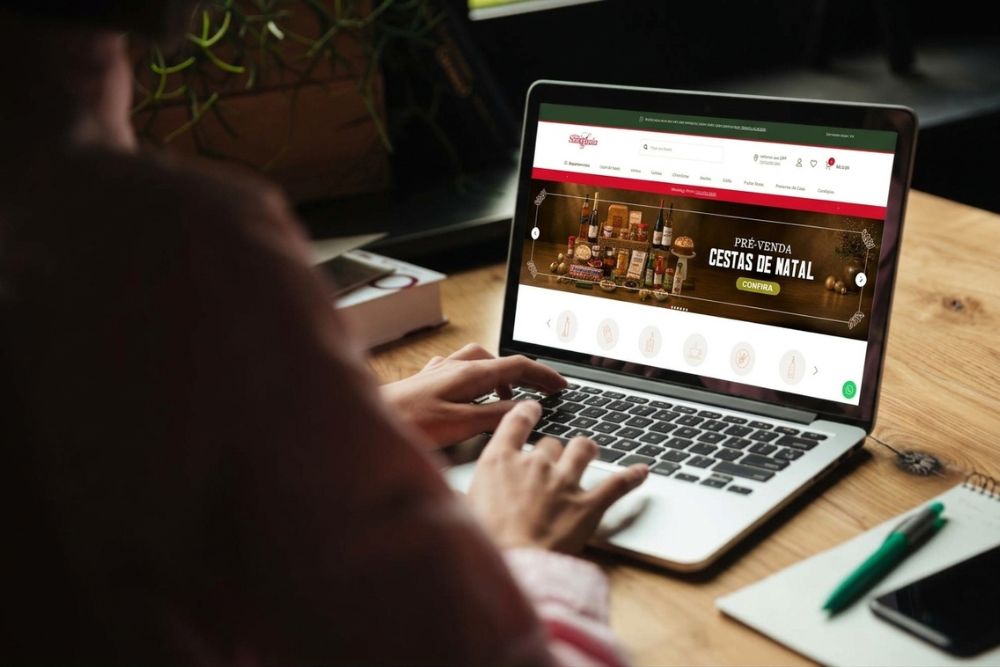
Why would a store that already sold well on Google still need to invest in SEO? The answer appears in the numbers for Casa Santa Luzia : between January 1st and August 31st, 2026, the São Paulo-based gastronomy store received 20,4% more organic sessions than in the same period of 2025 (from 399.500 to 480.746 visits from search). And this result began to be built months before it appeared in any report.
The store didn't start from scratch. Founded in 1926 by a Portuguese immigrant and located in the Jardins neighborhood of São Paulo, Casa Santa Luzia already had a consolidated organic channel and more than 30 national and imported items in its catalog. That was precisely where the challenge lay: growing on a base that already works well requires more effort, not less.
On this page you will find:
Casa Santa Luzia: the summary of the results
- Organic sessions increased by 20,4% between January and August 2026 compared to the same period in 2025., going from 399.500 to 480.746.
- Organic revenue totaled R$ 1.808.275,46 During this period, it was 7,8% higher than the previous year.
- The SEO partnership with e-Plus has been ongoing since April 2025.not a one-off campaign action.
- Easter and Christmas pages were produced in advance. to be indexed before the peak of demand.
- Christmas was the central focus., including the holiday gift baskets that the store has been offering since 1952.
- Black Friday has become part of the seasonal content calendar., expanding the dates worked.
A strong organic channel is the foundation, not the ceiling.
In retail, it's common to treat a good Google ranking as a goal already achieved. The store appears on the first pages, traffic comes in, and SEO falls off the priority list. The Casa Santa Luzia case study points to the opposite: a mature organic channel is the starting point for further growth, provided it receives consistent work.
This reasoning becomes clearer when looking at the weight of search in digital retail. According to the Sectors: E-commerce in Brazil Report, by Conversion (December 2025), organic search accounts for 27,5% of e-commerce traffic in the country on desktop , the largest channel after direct access and ahead of paid search, which accounts for 21,8%. This is a qualified audience that arrives on its own and without cost per click. Losing position in this channel means giving space to the competitor.
For a store with tens of thousands of products, there's an even less visible benefit. Each well-structured page is another opportunity to be found in a specific search. The larger the catalog, the more different queries the store can handle, and the more relevant it becomes to organize, prioritize, and keep this content visible throughout the year.
Anticipating seasonality: indexing before the peak.
The central point of the work was timing. In retail, the demand for Easter , Christmas , and Black Friday is concentrated in a few weeks, and it is during this period that the competition for attention becomes most expensive. Those who only start producing content when the period arrives are behind: Google needs time to crawl, index, and trust a new page before displaying it in a prominent position.
Therefore, Casa Santa Luzia's seasonal pages were created with plenty of time to spare . Christmas (the most important date for the store, driven by end-of-year gift baskets) received special attention, and Easter followed the same pattern of anticipation. Black Friday was incorporated into the calendar so that the store could also capture the growing demand for that date in the digital environment.
Anticipating isn't just a matter of editorial calendar. It's about giving content the maturation time that the algorithm requires, so that the page reaches the peak demand period already indexed, positioned, and ready to convert . When demand rises, the hardest work has already been completed weeks in advance. This difference in timeline often explains why stores with similar products appear in very different positions on the same commercial date.
➡️ Read also – SEO for the end of the year: now is the time to act in e-commerce
What can the retail sector learn from Casa Santa Luzia?
The lessons from this case study apply to any retail operation, physical or digital. The first is that SEO is continuous work, not a project with a beginning and an end . The 20,4% growth came from a partnership maintained month after month since April 2025, and not from an isolated action . Organic search rewards consistency: authority, indexing, and ranking accumulate over time and are lost when the work stops.
The second lesson is to plan for seasonality months in advance . Every store has its dates, and almost all of them are predictable. Mapping this calendar and preparing content before the competition is an advantage that doesn't depend on media budget, but on method and production discipline . It's an area where the average retailer still leaves results on the table because they treat seasonal content as a last-minute emergency.
The third is to track the right metrics . Organic sessions show the channel's reach; organic revenue shows whether that reach converts into sales. In the case of Casa Santa Luzia, both indicators grew (a sign that the additional traffic was qualified, not just volume) . Looking at both numbers together avoids celebrating visit growth that doesn't translate into sales.
There's also a message about expectations. A store without an organic presence and an established store start from different points, but both have room to grow. In the first case, SEO builds the foundation; in the second, it defends the conquered ground and opens new search fronts . Casa Santa Luzia's results belong to the second group, and that's why it's of interest to those who already sell and want to continue growing.
Talk to someone who has already done it.
Casa Santa Luzia demonstrates that organic growth is the result of strategy and consistency, not luck. If your retail operation has seasonal dates to explore and a catalog waiting to be found, it's worth talking to the e-Plus SEO team about how to build that same type of growth . And, to delve deeper beforehand, explore other blog content about SEO for e-commerce.
FAQ
What is seasonal SEO?
Seasonal SEO is optimization work focused on peak demand dates, such as Easter, Christmas, and Black Friday. It consists of creating and preparing specific pages for these dates in advance, so that they are indexed and well-positioned on Google when consumer demand reaches its peak.
Why publish seasonal pages in advance?
Because Google takes time to crawl, index, and rank a new page. Publishing at the last minute means competing without accumulated authority. With weeks of advance notice, the page matures and arrives at the peak search period already ready to attract and convert visitors.
Does SEO work for those who already sell well organically?
Yes. A strong organic channel is the foundation for growth, not the ceiling. Casa Santa Luzia already had a good presence in search and still increased its organic sessions by 20,4% in 2026. For established businesses, SEO defends the positions achieved and opens up new search queries to explore.
How long does it take for SEO to show results?
SEO is a medium- to long-term channel. Initial gains usually appear within a few months, but the compounding effect emerges with continued work. In the case of Casa Santa Luzia, the 20,4% growth was measured over an ongoing partnership that began in April 2025.